
To win a photography contest, enter your strongest image in the category where it fits best, follow every rule to the letter, and make sure the photo has clear impact, solid composition and clean technique. Judges often look at hundreds or thousands of entries, so a photo that grabs attention in a few seconds and holds up on a closer look has the best chance.
Talent matters, but many good photos never reach the final round because of simple mistakes: the wrong category, a missed file requirement, too much editing or a watermark. This guide walks you through the whole process, from reading the brief to choosing a contest that respects your rights.
Choose the right photo competition
Your chances start before you pick a photo. A photo contest that matches your style and subject gives you a fair shot, while a big international award with tens of thousands of entries is a very different challenge.
- Match your strengths: if most of your portfolio is landscape or wildlife, look for contests with strong categories for that work.
- Start local or specialized: camera club competitions, amateur photography contests and niche contests often have fewer entries and give useful feedback.
- Look at what winners receive: a prize, a gallery show, publication or simply recognition. Decide what matters to you.
- Check the organizer: a clear name, contact details, named judges and a public gallery of past winning images are good signs.
Read the brief and the rules first
Every photography contest has its own rules, and judges will not bend them. Before you choose a single photo, read the fine print: the full rules and the terms and conditions. Look for:
- Theme or brief: what the organizers want to see, in their own words.
- Eligibility: amateur contests often exclude professionals, contest staff and past winners. Check the definition of amateur carefully.
- Date limits: some contests only accept photos taken within a certain period.
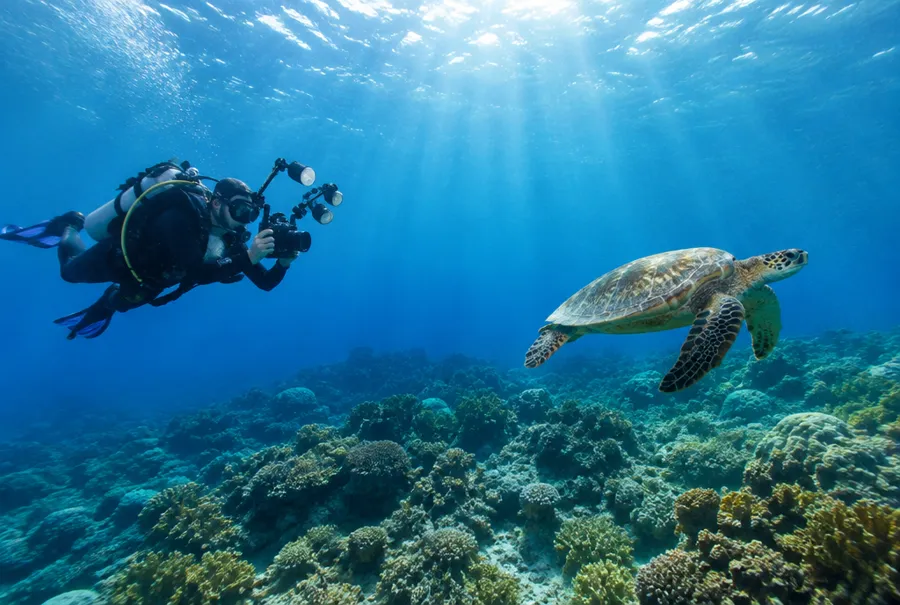
- Location or subject rules: for example, the EPIC rules require underwater images taken in open water and set conservation standards for how divers treat marine life.
- Editing rules: what adjustments are allowed and what counts as manipulation.
- File specs and deadlines: format, size, resolution and the exact closing time, including the time zone.
- Usage rights: what the organizer may do with your photo, and for how long.
Write down the key points in a short checklist and check each entry against it before you submit.
Choose the right category
Category choice can make or break an entry. A great macro shot in a wide-angle category will be judged against the wrong standards, and some contests will disqualify it outright.
- Read each category description, not just the title. At EPIC, for example, the categories separate saltwater wide-angle, saltwater macro, freshwater, creative, conservation, prints and video.
- Put heavily edited or composite images only in categories that allow them, such as a creative or open category.
- If a photo could fit two categories, enter it where it is strongest compared to the likely competition, not where it merely qualifies.
- Check whether the same photo may be entered in more than one category. Many contests do not allow it.
Pick your strongest photos
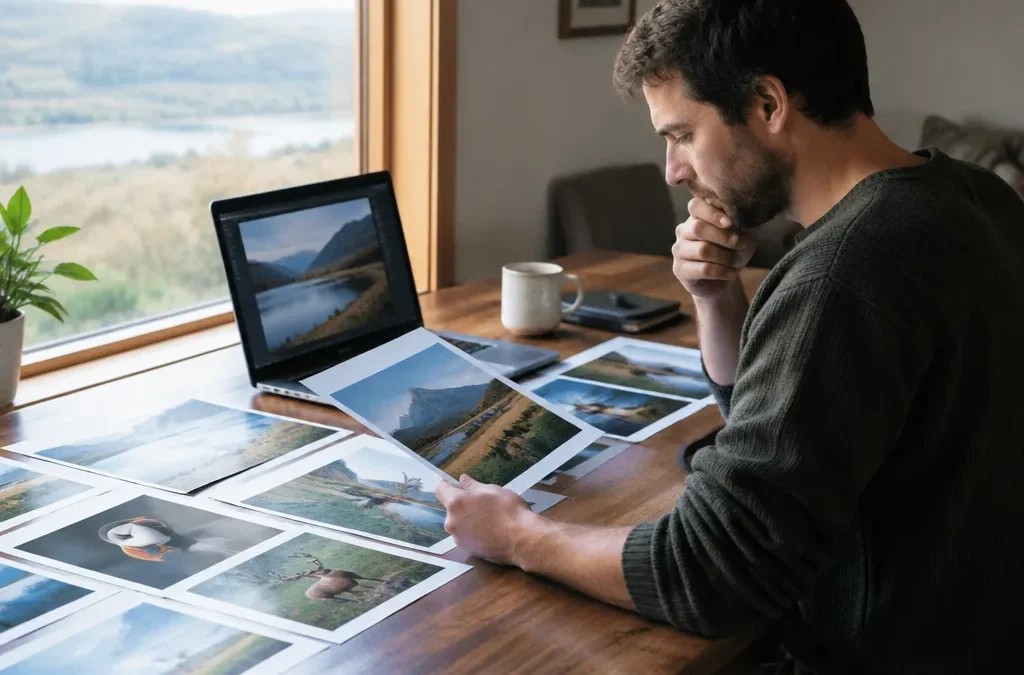
Most photographers are too attached to their own images. Be strict.
- Choose photos that make you stop, not just photos that were hard to take.
- Look at your shortlist as small thumbnails. Judges often see entries at small size first, so the image needs a strong shape, light or color that reads quickly.
- Ask someone you trust, ideally another photographer, to pick their favorites without explanation from you.
- Remove near-duplicates. Two similar frames compete against each other.
- Study past winners. The 2007 winners show what EPIC judges rewarded, and most contests publish similar galleries. Look at what worked, but do not copy it.
Understand what judges score
Every photography competition has its own criteria, but most come back to the same core areas. The EPIC judges’ guidelines score still images on composition, difficulty or uniqueness, technical aspects such as lighting, exposure and focus, and overall impact.
Impact
Impact is the first reaction a photo creates. Does it surprise, move or amaze the viewer? A strong emotional response often decides which images go through to the next round.
Composition
Judges look at how you arranged the frame. Is the subject clear? Are the edges clean? Does the eye move where you want it to go? Tools like the rule of thirds, leading lines and negative space help, but only if they support the image.
Technique
Sharp focus where it matters, good exposure, controlled highlights and natural color are basic expectations. Noise, halos from over-sharpening and crooked horizons are easy reasons to drop an entry.
Story and originality
A photo that shows a familiar subject in a fresh way stands out. Judges see the same popular locations and the same poses again and again. Think about what makes your image different: a rare moment, an unusual angle, special light or a clear message. Soft, warm golden hour light can help, but light alone rarely carries a winning image.
What makes a photo stand out in a contest?
Judging is always partly subjective, and a jury rarely agrees on everything. Still, the photos that make the shortlist usually share a few traits. They have one clear subject, no distraction pulling the eye away, strong light and sharpness exactly where it matters. They show a moment or a point of view the judges have not seen many times before. And they look intentional, as if every photographic choice was made on purpose. Remember that judges often do their first round of viewing on a screen, one entry after another, so an image needs to work at a glance and reward a closer look.
Edit within the limits
Editing rules vary widely between contests, and even between categories in the same contest. Nature, wildlife and documentary categories usually allow only basic adjustments. Open or creative categories may allow much more.
Adjustments that most contests accept:
- exposure, contrast, white balance and saturation,
- cropping, as long as enough resolution remains,
- sharpening and noise reduction,
- removing dust spots from the sensor.
Changes that are often restricted or banned:
- adding, removing or moving objects in the scene,
- replacing the sky,
- combining several photos into a composite,
- focus stacking, HDR or panoramas, unless the rules say they are allowed.
Keep your original RAW or unedited files. Many contests ask finalists to send them to prove the image is genuine. If you cannot provide them, you may be disqualified even if the photo is real.
Follow the AI and authorship rules
Many photography contests now ban images created with generative AI, and many also ban generative editing tools that add new content to a photo. Some ask entrants to sign a declaration and request original files in later rounds. Read the exact wording: a rule might allow AI-based noise reduction but ban generative fill.
Also check authorship rules. Many contests require that you took the photo and did the editing yourself. You also need the right to enter the image. If a recognizable person appears in the photo, some contests ask for a model release, especially if they plan to publish the winners.
Get the file specs right
A technical mistake can remove a great photo before any judge sees it. Check:
- File format: usually JPEG for digital entries.
- Size: the required long edge in pixels, the maximum file size in megabytes, or both.
- Color space: sRGB is the safest choice for screen judging unless the rules say otherwise.
- File name: some contests require a specific naming pattern, or ask you to leave your name out so judging stays anonymous.
- Prints: check size, paper, mounting and labeling. EPIC, for example, asks for prints mounted on 16 x 20 foam core with identifying information on the back.
Export a copy for each contest instead of reusing one file for everything.
Write a good title and caption
Titles and captions matter more than many entrants think, especially in documentary, conservation and wildlife categories.
- Keep the title short. It should add something to the image, not describe what is already visible.
- In the caption, give useful facts: location, species, what was happening and anything unusual about the moment.
- Be honest. If you describe the photo as wild, unbaited or unposed, it must be.
- Do not put your name in the title if the judging is anonymous.
Avoid common disqualifications
These are the mistakes that end an entry fastest:
- Watermarks, signatures or borders on the image when the rules say no.
- Wrong category or an image that does not match the theme.
- Too much editing for the category, or a composite in a category that bans it.
- AI-generated content where it is not allowed.
- Missing originals when the organizer asks for RAW files.
- Rights problems: photos you did not take, or images already sold with exclusive rights to someone else.
- Previous winners: many contests exclude images that already won elsewhere.
- Ethics problems: baiting, disturbing wildlife or damaging the environment. EPIC screens entries for signs of touching or stressing marine life.
- Late entries: deadlines are firm, and upload systems can slow down in the last hours.
Entry fees, free contests and red flags
Both paid and free photography contests can be worth entering. What matters is who runs the contest and what happens to your photos.
Entry fees
A fee is not a warning sign by itself. Fees often pay for judges, prizes and administration, and some contests use them for a cause. EPIC, for example, explains where your entry fee goes: it supports a scholarship society that funds hands-on marine science internships. Look for the same kind of openness from any contest you enter.
Free entry contests
Free contests are great for practice and exposure, especially if you are new. But some free contests exist mainly to collect photos. Read the terms just as carefully as you would for a paid contest.
Red flags: rights grabs
A rights grab is a clause that gives the organizer broad rights to your photo without fair pay or credit. Watch out for terms that:
- apply to all entries, not just the winners,
- grant a license that is perpetual, irrevocable or worldwide for any purpose,
- allow commercial use, such as advertising or selling your image, without payment,
- allow the organizer to pass your photo on to partners or third parties,
- transfer your copyright to the organizer,
- do not promise credit when your photo is used.
A fair contest usually asks only for a limited license to use entries or winning images to promote the contest itself, with credit to you. If the terms are unclear, email the organizer and ask. If the answer does not match the written rules, trust the written rules.
Other warning signs include no named organizer, no named judges, no published past winners, fees that rise with every additional image without a clear reason, and prizes that are vague or mostly “exposure.”
Keep learning from every result
Even experienced photographers lose far more contests than they win. Treat each contest as feedback. If the contest publishes the winners, compare them with your entries. Look at their light, composition and story. Some contests and camera clubs offer judge feedback or critiques, which can be more valuable than a prize.
Photo contest entry checklist
- Read the full rules, terms and usage rights.
- Check eligibility, including amateur status.
- Choose the category that fits each photo best.
- Pick your strongest images and remove near-duplicates.
- Check impact, composition, technique and story.
- Edit only within the allowed limits.
- Confirm that no generative AI is used where it is banned.
- Keep original RAW or unedited files ready.
- Export files in the required format, size and color space.
- Remove watermarks, signatures and borders.
- Write a short title and an honest caption.
- Submit well before the deadline.